
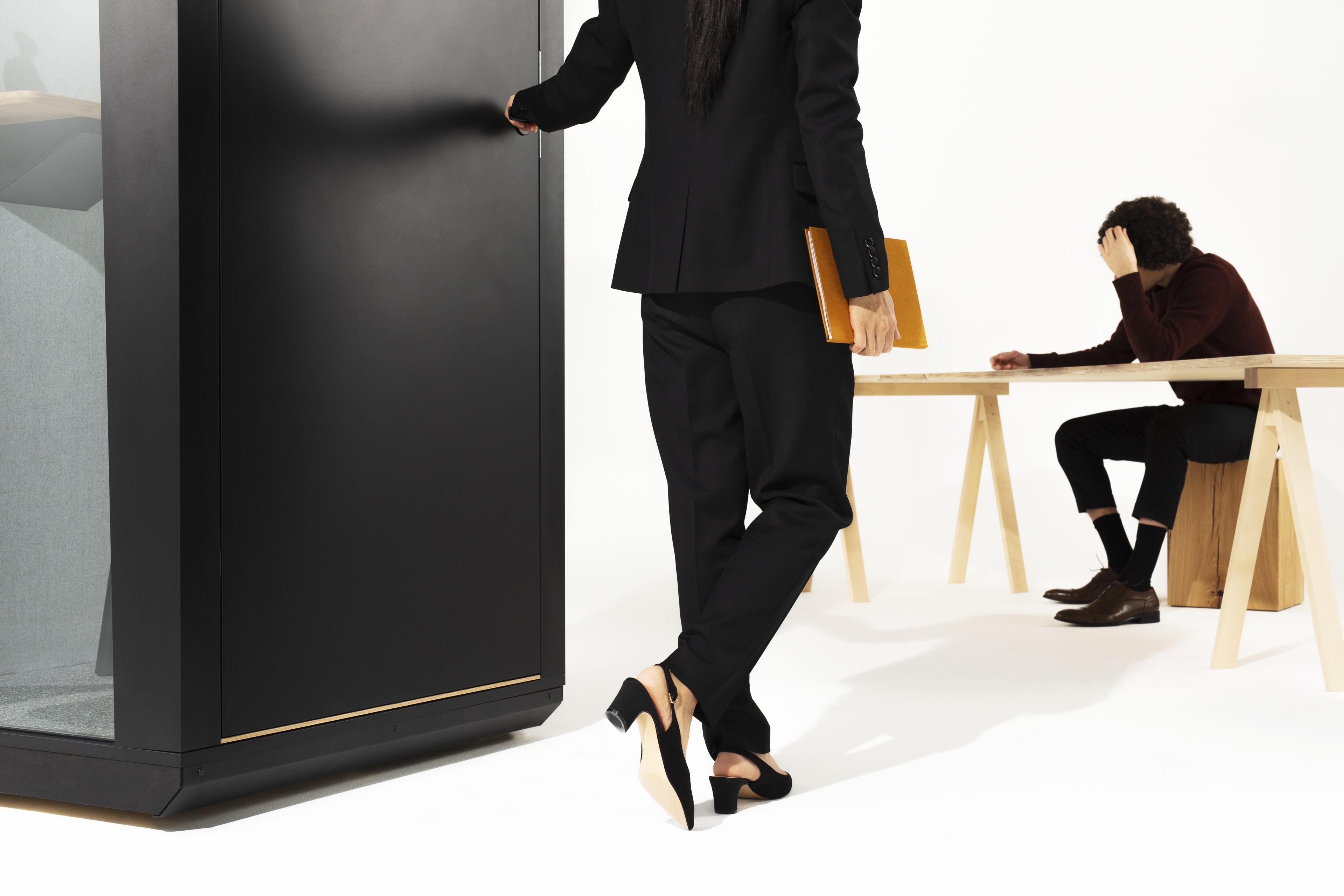
How to achieve a more peaceful work environment in an open-plan office
- Why is it worth investing in a harmonious working environment?
- From an open-plan office to a multi-space office – Tools for improving peace and quiet at work
- A quiet retreat brings a sense of calm and focus to the office
- Tips for improving workplace harmony
- Download the guide: Handbook for a Good Working Environment – A Guide to the Placement of Quiet Spaces
1. Why is it worth investing in a peaceful working environment?
Interruptions, a distracting environment and noise reduce work efficiency. Even the most inspiring work becomes demotivating if your ability to concentrate is constantly being tested.
However, environmental distractions do not affect everyone in the same way: one person might be able to get on with their writing at a counter in a noisy café, whilst another’s train of thought might be interrupted simply by a colleague shifting position in their chair. A conversation can interrupt one’s work, even if the topic is unfamiliar or uninteresting to them. The sounds of people eating, the rustling of sweet wrappers and the clattering of furniture are equally distracting. In an open-plan workspace, sounds travel throughout the space and it is easy to lose concentration.
When your train of thought keeps getting interrupted, returning to an unfinished task feels difficult or even impossible. Many people find themselves caught in a vicious circle of avoidance: an employee frustrated by these interruptions procrastinates until the very last minute and is only able to give their full attention to their work when under intense pressure.
A working environment in which a sense of calm is only achieved when things are extremely hectic is not motivating in the long run, nor does it encourage the best possible results.
It can take as long as 15–20 minutes to return from a mental break to deep work, and when there are several interruptions a day, vast amounts of productive working time are wasted. According to one study, up to 3–5 hours of the working day are spent unproductively when one’s concentration is constantly disrupted.
The working environment affects a person’s well-being, as commotion and noise put the body under stress. When you’re stressed, even a dream job that would normally be motivating can become a source of anxiety, and you may find yourself lacking the enthusiasm to get on with your work. In particular, those engaged in knowledge-based and specialist work that requires concentration suffer if an open-plan workplace does not provide the peace and quiet and quieter areas needed to focus.
At the same time, workspaces that facilitate conversation and interaction inspire many people to work efficiently. Supporting different ways of working is key to a functional working environment: there is a place and time for both conversation and intensive work.
Open-plan workspaces can be improved by providing a peaceful working environment and quiet areas for those who need them. When the working environment enables staff to maintain their focus, work becomes more efficient and employees remain motivated.
Different needs can be accommodated by dividing the space into work zones where possible and introducing rules – this way, both knowledge workers and sales staff who spend a lot of time on the phone can feel at home under the same roof.
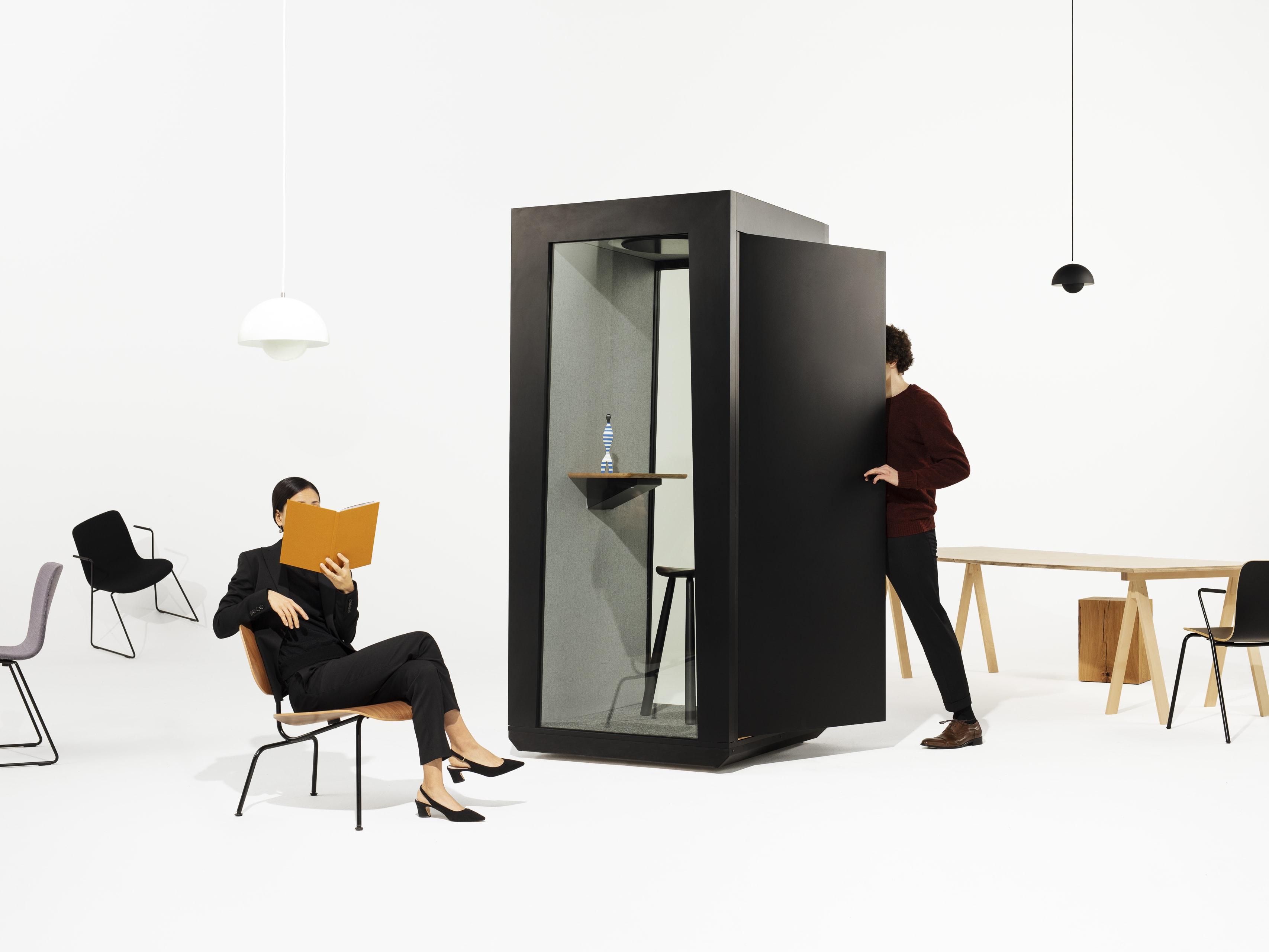
2. From an open-plan office to a multi-space office – Tools for improving peace and quiet at work
What is a multi-space office?
A multi-space office is an office that contains a variety of spaces to meet the different needs of employees.
Unlike an open-plan office, a multi-space office offers its users more than just an open space. A well-designed multi-space office improves space efficiency, encourages communication and provides employees with a peaceful working environment.
There is no single ‘right’ type of multi-purpose office, as, in order to function optimally, the design of the space must be based on the needs and wishes of its users.
How can the features of a multi-space office be utilised in an open-plan office?
1. Identify the needs of the space’s users.
If a lack of peace and quiet is disrupting day-to-day life in an open-plan office, the first step towards remedying the situation is to find out what the employees would like. Have an open discussion in the office about what disrupts concentration the most: are the difficulties with concentration constant or occasional, and what sort of solutions would employees like to see?
2. Introduce quiet spaces
into the office. Quiet spaces can quickly improve the peace and quiet of an open-plan office – without the need for any building work. Depending on the nature of the work, a peaceful working environment can be created either by introducing quiet, focused workspaces or, alternatively, by directing disruptive or noisy tasks elsewhere, such as phone booths and rooms designed for remote meetings or quick discussions. Quiet zones provide staff in an open-plan office with the option to choose a workstation based on the task at hand and also improve the working environment outside these quiet zones.
3. Agree on
common rules Partitions between desks and areas reduce noise and create a sense of privacy. A shared workspace can also be made more peaceful by agreeing on common rules. Why not try directing phone calls and conversations to a specific area of the office or a designated quiet space to see if this improves the peace and quiet? And would a rule stating that you must not interrupt a colleague who is wearing headphones help the situation?

3. A quiet retreat brings a sense of calm and focus to the office
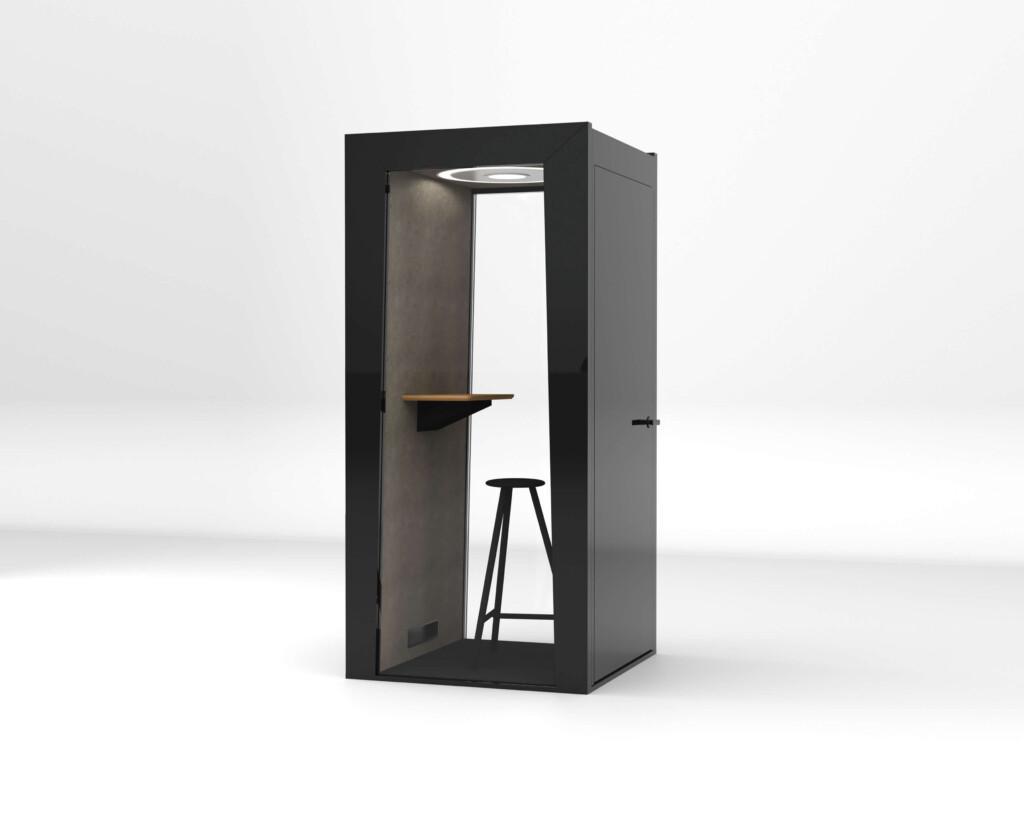
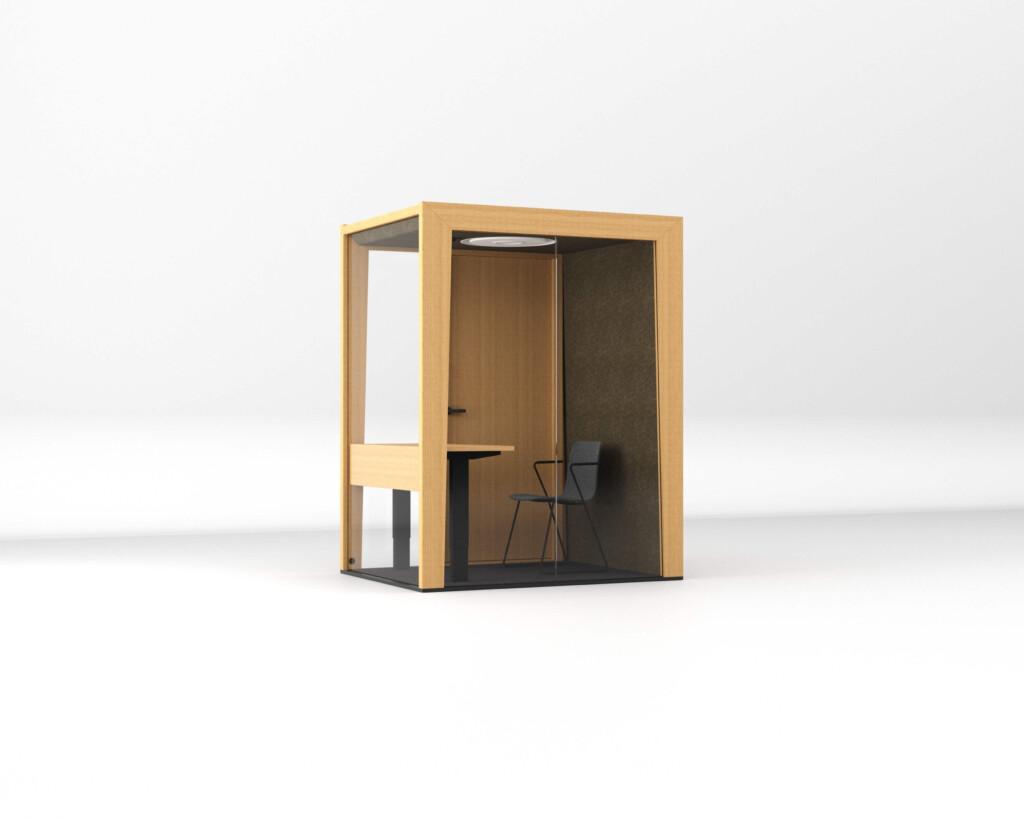
A quiet space can be a phone booth, a workspace, a remote meeting room, a meeting room, a quiet corner, a writing room or a rest area – it’s up to you
Quiet zones are a handy solution for improving peace and quiet in an open-plan workspace. Even just one quiet room in the office reduces noise levels when it is allocated to where it is most needed and positioned so that it is quick and easy to access.
It is advisable to establish rules for the use of quiet rooms so that they can serve as many users as possible. For example, it is not advisable to book a shared phone booth for several hours to use as a private writing space. Although even a single quiet room can provide a quick fix for a crisis in peace and quiet, it is worth ensuring that the office has a sufficient number of such spaces from the outset, so that they are guaranteed to be flexibly available.
What problems does a retreat solve?
The peace and quiet of a noisy working environment can be improved by installing phone booths and meeting rooms, or alternatively by providing staff with workspaces for tasks that require concentration. It is therefore advisable to choose the layout according to the nature of the work: the needs and working methods of a fast-paced sales office differ from those of experts engaged in knowledge work.
Workspaces, remote meeting rooms and phone booths are solutions that enhance the peace and quiet of the workplace. A rest area, on the other hand, helps employees recharge during the working day: there is a designated space for breaks and relaxation. A retreat, furnished as a coding pod, writing space or editing room, is helpful when work involves tasks that require undisturbed concentration.
The size of the quiet room can also be used to provide flexibility in how the space is used. A single-person room remains in use precisely for its intended purpose: for example, making phone calls. A two-person retreat room can, if necessary, be used as a telephone booth, a room for remote meetings and quick get-togethers, or a workspace. A large meeting room, on the other hand, offers an even more flexible solution, allowing impromptu meetings to be held for up to four people when required.
It is not worth introducing a quiet space into the office without first considering what purpose it will ultimately serve. Once you know what your staff need, quiet spaces can offer an easy, effective and comfortable way to transform an open-plan office into a multi-space office environment.
Features of the retreat facilities
The three most important features of a retreat are:
- soundproofing
- ventilation
- lighting.
The workspace must block out noise from both inside and outside the room: no sound should be heard from the room to the outside, nor from the outside into the room. Effective work requires good ventilation to ensure mental alertness, as well as appropriate lighting that does not, for example, cause glare on the computer screen.
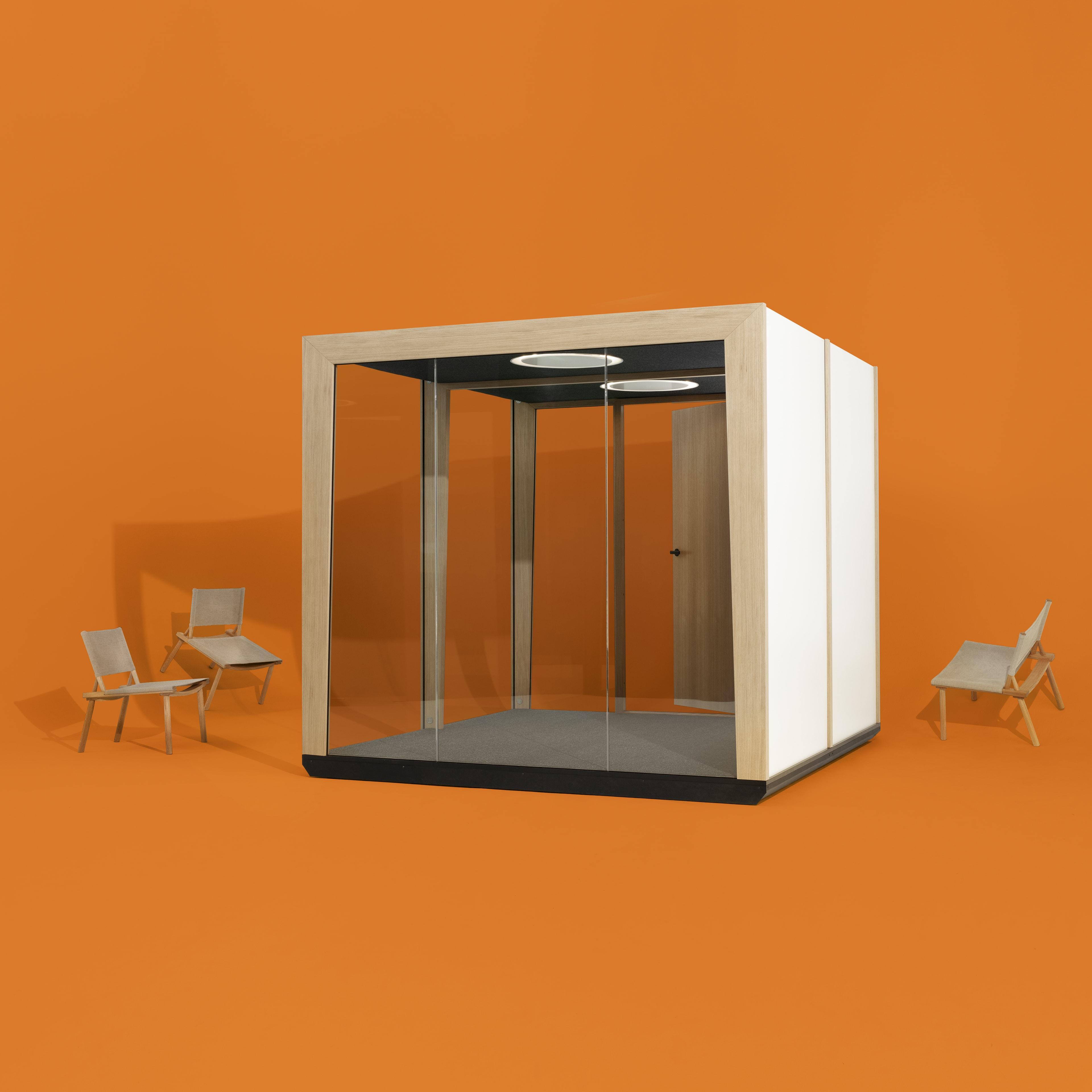
With a glass-walled quiet room, it’s easy to check at a glance whether the room is free. If necessary, however, the glass walls can be covered with tape if you wish to improve your ability to concentrate by minimising visual distractions.
Browse the collection
4. Tips for improving workplace harmony
Rules (and adherence to them) ensure a peaceful working environment
Mutually agreed rules on working in an open-plan office and using quiet areas make day-to-day life clearer and create the conditions for working efficiently.
Check out the list below for tips on creating a rulebook for an efficient office:
- If the office has a separate quiet area, mobile phones and other audible alerts must be set to silent in this area. You must not talk to colleagues or use your mobile phone in the quiet area.
- Phone calls, remote meetings and quick discussions should take place in phone booths or other designated areas. This helps to keep the open-plan office quiet, even if conversation is permitted in the area.
- No meetings or discussions are held in the open-plan workspace – meeting rooms, consultation booths or, if necessary, a break room are more suitable for discussions than a shared open-plan space where others are trying to concentrate on their work.
- An employee in ‘withdrawal mode’ must not be disturbed. This rule can also be extended to other areas by, for example, creating a ‘focus zone’ in the office where employees working there must not be disturbed. The same rule regarding interruptions can also be applied, for example, to working whilst wearing headphones.
- Flexible usage times can be set for the quiet working area. For example, for tasks lasting more than an hour, it is a good idea to move to a quiet work area or a meeting room if available. An ‘efficient hour’ usually helps you to focus on your most urgent tasks.
- Position the break areas as close as possible to the desks and workstations so that they are easy to access.
- Furnishing a quiet space helps to designate the space for a specific purpose and guide staff in how to use it. If the quiet space is intended as a rest area, furnish it in a relaxed style and encourage staff to use the space specifically for this purpose, rather than as a phone booth or a workroom.
Download the free guide: Handbook for a Good Working Environment – A Guide to the Placement of Quiet Rooms
A working environment isn’t completed in one go: needs change, and the office must be flexible enough to accommodate employees’ wishes.
With quiet spaces, even rapid changes can be implemented effortlessly and cost-effectively, and it’s easy to continuously develop the office.
We’ve put together a guide containing all the information you need on choosing and positioning quiet spaces. Download the guide!


